Overview
Common name: winter squash
Scientific name: Cucurbita maxima
Taxonomy: Cucurbitaceae/Trib. CUCURBITEAE Ser./Cucurbita L.
Abbr: Cma
Level: Scaffold
chromosome number: 2n=2X=20
Genes: 24,155
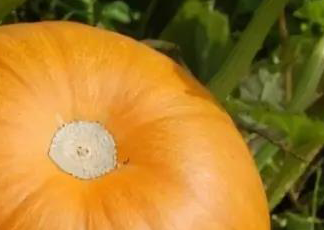
Introduction: Annual Cranberry vine; The stems were stout, cylindrically shaped with short, white setae. The petioles were stout, cylindrical, 15-20 cm long and closely surrounded by short bristles; Leaf reniform or round kidney shaped, 15-25 cm in length with near full margins or only fine serrations, apical obtuse round, basal heart shaped, lack of dilation, both approximately 2 cm in depth and width, leaf surface dark green, leaf dorsum light green with short bristled veins on both sides distinctly uplifted on the dorsal surface. The tendrils are stout, often multiple, and hydrophobic with short bristles. Hermaphrodites. Male flowers are single born with pedicels 10-20 cm long and pubescent; The calyx barrel is bell shaped, lobed linear lanceolate shaped, 1.8-2 cm long, and closely surrounded by white short bristles; Corolla barrel like, 5 middle cleft, lobes ovoid, apex blunt, both 2-3 cm long and wide with ruffled edges, everted outward, with 3-5 uplifted veins, the middle one extending to the apex into a pointed tip, the veins with a distinct shortness, the stamen 3, the filaments rested, 5-7 mm long, nearly hairless or only Brachyury at the basal pole, the anthers rested, and the drug compartment flexed. Gynandra monocytogenes; Ovary ovoid with short columella and stigma 3 and 2 cleft. The fruit pedicles are short, cylindrically shaped, not prismatic and grooved, and the pedicles of melon are not enlarged or slightly expanded; The shape and color of a bottle varies among varieties; Seed fullness, flattening, obtuse margins or how many arches up.
Native range: India in origin; It is commonly cultivated throughout the South and north of China.
Flowering and Fruit: NA
Article Title: Karyotype Stability and Unbiased Fractionation in the Paleo-Allotetraploid Cucurbita Genomes
Data source: CuGenDB